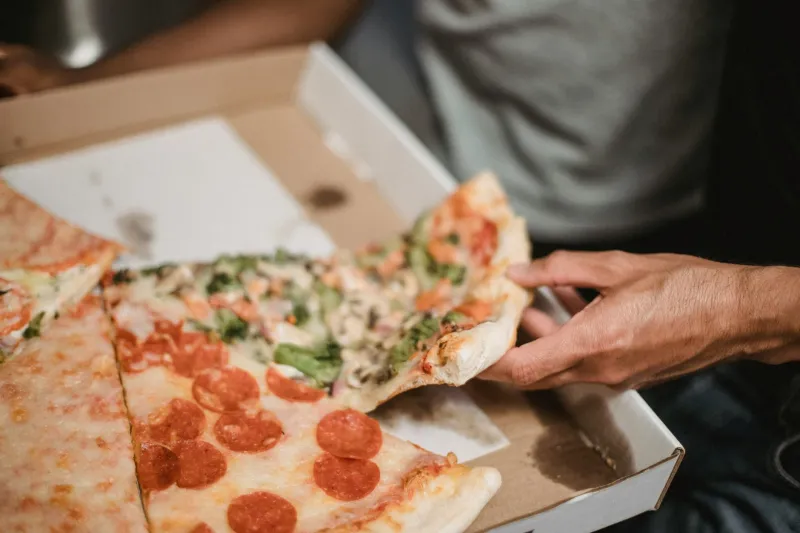
The Moment of Recognition
It happens in slow motion. Two sets of eyes lock onto the same target: the last slice of pizza, sitting there like a cheesy beacon of potential conflict. For a split second, time stops. This isn't about food anymore. This is about who blinks first in the most polite battle ever fought.
You both freeze mid-reach, hands suspended in the air like you've just been caught stealing from the cookie jar. Except the cookie jar is a communal pizza box, and you're both technically allowed to be here. The math is simple: two people, one slice. The solution should be equally simple. It never is.
The Performance Begins
What follows is an Oscar-worthy display of fake generosity that would make diplomats weep. "Oh, you go ahead," you say, while secretly calculating whether they'll actually take it. "No, no, you were here first," they counter, even though you both arrived at exactly the same microsecond.
This isn't kindness. This is strategic politeness designed to make the other person feel guilty enough to insist you take it. You're both playing the same game, and you both know it, but the rules require you to pretend this is spontaneous generosity.
The hand gestures become increasingly elaborate. Sweeping "after you" motions that belong in a Jane Austen novel. Backing away from the table like the pizza might explode if approached incorrectly. Someone always does that little laugh that means "this is ridiculous but we're committed to the bit now."
 Photo: Jane Austen, via jasna.org
The Escalation Protocol
When basic politeness fails, the stakes get raised. Suddenly everyone becomes a nutritionist. "I really shouldn't," says the person who definitely should and definitely will if given the proper encouragement. "I'm trying to eat lighter," announces someone who ordered a large pizza an hour ago.
The medical excuses come next. Mysterious stomach situations that conveniently appeared in the last thirty seconds. Dietary restrictions that sound suspiciously improvised. "I'm actually lactose intolerant," declares someone who literally just finished two slices without incident.
Then comes the nuclear option: bringing up the other person's perceived needs. "You've been working so hard, you deserve it." "You barely ate anything at lunch." This is warfare disguised as care, and everyone knows it.
The Negotiation Phase
Eventually, someone suggests splitting it. This seems reasonable until you realize that splitting one slice of pizza is like performing surgery with a plastic fork. The person with the knife becomes the most powerful individual in the room. The angle of the cut will be analyzed like the Zapruder film.
 Photo: Zapruder film, via is1-ssl.mzstatic.com
Everyone pretends that half a slice is exactly what they wanted all along. "Perfect!" they say, looking at their triangular fragment like it's a Michelin-starred portion. The person who got the slightly larger half will spend the next five minutes apologizing for the uneven distribution.
The Psychological Aftermath
The winner—if anyone can truly be called a winner in this scenario—experiences immediate buyer's remorse. Was it worth it? The slice tastes different when it's been the subject of a diplomatic incident. Every bite carries the weight of social awkwardness.
The loser performs an elaborate show of being totally fine with the outcome. "I'm so full anyway," they announce to no one in particular, patting their stomach like they've just finished Thanksgiving dinner. They will think about that slice for the next forty-five minutes.
The Unspoken Rules
Somewhere along the way, society developed an entire legal framework for these situations, and nobody wrote it down. The person who ordered the pizza gets slight preference, unless they already had three slices. The hungriest person wins, but only if they can prove their hunger without seeming desperate.
Guests trump hosts, unless the guest is being too polite. Children get automatic priority, except when they don't finish their first slice. Pregnant women have nuclear-level claim rights. People on diets are both encouraged to indulge and discouraged from breaking their commitment.
The Resolution
Eventually, someone breaks. They either take the slice with an elaborate apology tour, or they walk away with an equally elaborate explanation of why they never wanted it anyway. The group pretends this was a normal interaction between reasonable adults.
The empty box sits there afterward like evidence of a crime scene. Nobody mentions the incident again, but everyone remembers exactly how it went down. The next time there's a last slice situation, the same people will perform the exact same dance, because that's what civilized humans do.
We've turned sharing food into a psychological thriller, and somehow we're all okay with that. The last slice isn't about hunger—it's about proving you're the kind of person who would definitely offer the last slice to someone else. Even if you really, really don't want to.