The Olympic-Level Mental Gymnastics of Avoiding That Return Trip

The Opening Ceremony: Denial
Somewhere in your bedroom, closet, or that chair that exists solely to hold clothes that aren't dirty enough for the hamper but aren't clean enough for the closet, sits a package. You know the one. It's been there for approximately three months, still in its original shipping box, wrapped in that crinkly plastic that sounds like a bag of chips every time you accidentally brush against it.
This is not just any package. This is the physical manifestation of your poor life choices, wrapped in cardboard and sealed with the kind of industrial tape that requires either a chainsaw or the jaws of life to open.
You ordered it in a moment of weakness—maybe it was 2 AM and you were convinced you needed a vintage band t-shirt for a band you've never actually listened to, or perhaps it was that kitchen gadget that promised to revolutionize your relationship with vegetables. The point is, it arrived, you opened it, you immediately realized your mistake, and then began the most elaborate avoidance ritual known to modern civilization.
The Commitment Ceremony: Repackaging Theater
Returning something online should be simple, right? The website promised "hassle-free returns" and "easy 30-day policy." What they didn't mention is that this process requires the organizational skills of a NASA mission planner and the emotional fortitude of someone who's never experienced shame.
First, you must locate the original packaging. This becomes an archaeological dig through your recycling bin, because of course you threw away the box immediately after opening it, despite some deep-seated instinct telling you to keep it "just in case." Now you're elbow-deep in Amazon boxes, trying to remember which one held your regrettable purchase versus your equally regrettable impulse buy of organic quinoa chips.
Found it? Great. Now begins the repackaging ceremony, which is like trying to solve a three-dimensional puzzle designed by someone who clearly hates you. The item will not fit back in the box the same way it came out. This is a law of physics that applies specifically to returned merchandise. You'll spend forty-five minutes trying to recreate the exact folding pattern that some warehouse employee executed with machine-like precision.
The Great Tape Hunt: A Modern Odyssey
You need tape. Not just any tape—you need the kind of tape that suggests you're a competent adult who definitely didn't spend three weeks psyching yourself up for this moment. But here's the thing about tape: it's never where you think it is.
You'll check the junk drawer (where you find seventeen batteries of unknown charge status and a user manual for a printer you threw away in 2019). You'll check your desk (where you discover a small civilization of paperclips has formed). You'll check that basket in the kitchen where things go to die (where you find everything except tape).
Eventually, you'll find a roll of tape that has approximately three inches left on it, and half of that is stuck to itself in a way that defies the laws of physics and human patience. You'll spend another twenty minutes trying to find the end of the tape, using your fingernail to pick at microscopic edges like you're defusing a bomb.
The Internal Negotiation: Is It Really That Bad?
Somewhere during the repackaging process, your brain will attempt to negotiate with reality. "Maybe I could keep it," you'll think, holding up the item that you haven't touched since the day it arrived. "Maybe it's not that bad. Maybe I was being too hasty in my judgment."
This is the same brain that convinced you to buy it in the first place, so its credibility is questionable at best. But suddenly, that sweater that made you look like a rejected member of a 1990s boy band seems... almost wearable? That kitchen gadget that requires seventeen separate attachments for basic functionality seems... almost useful?
You'll try it on one more time, or test it one more time, hoping that somehow the fundamental laws of reality have changed in the past three months and the item has magically transformed into something you actually want.
Spoiler alert: it hasn't.
The UPS Store Pilgrimage: A Journey of Shame
Now comes the actual return trip, which requires leaving your house with a poorly taped box and the emotional weight of your poor decision-making skills. The UPS Store employee will look at your package with the barely concealed judgment of someone who's seen this exact scenario play out seventeen times today.
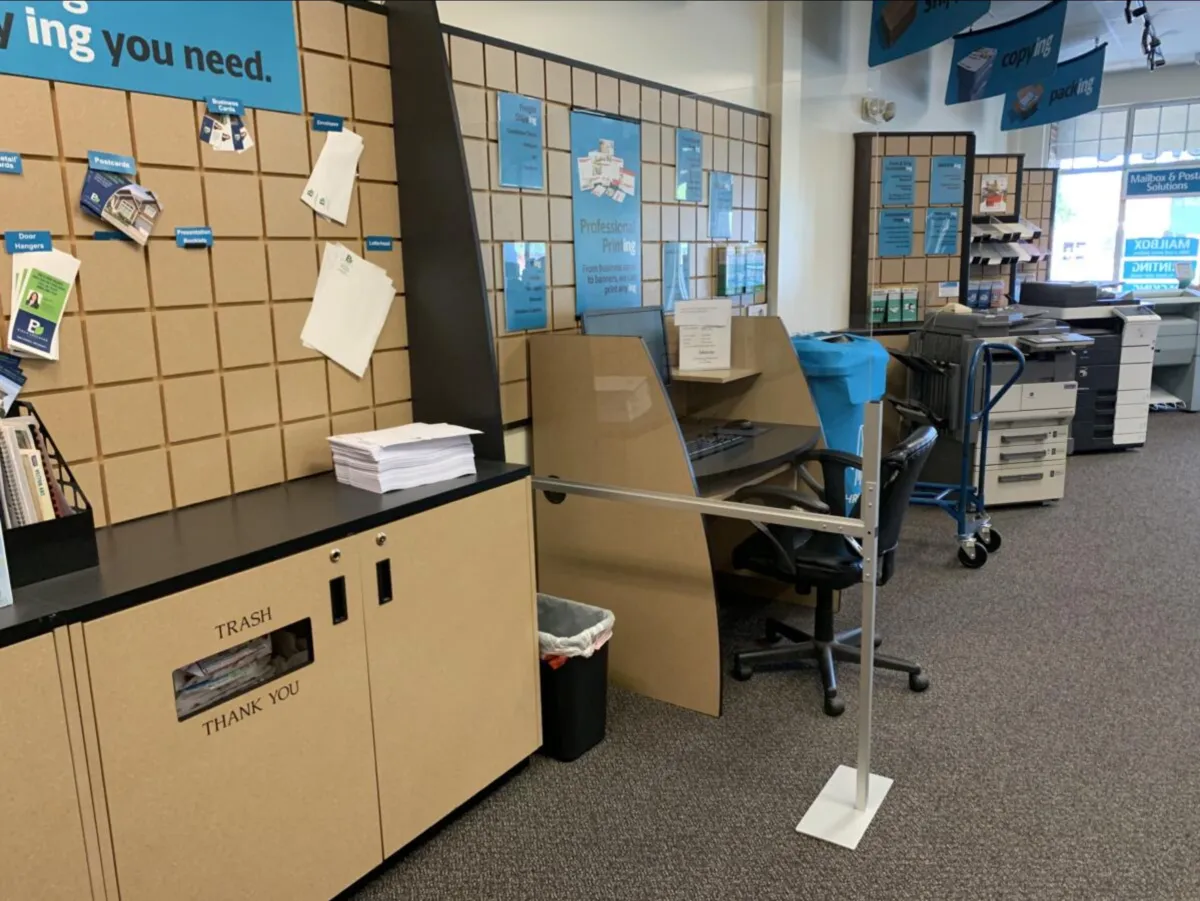 Photo: UPS Store, via b2829509.smushcdn.com
"Reason for return?" they'll ask, and you'll mumble something about size issues or "not what I expected," when the real reason is that you have the impulse control of a toddler in a candy store and the self-awareness of a golden retriever.
The Final Stage: Acceptance (and Amnesia)
Three weeks later, when the refund finally appears on your credit card statement, you'll feel a brief moment of triumph. You did it. You successfully returned something. You're a functioning adult who makes reasonable decisions and follows through on them.
This feeling will last approximately until the next time you're browsing online at 2 AM and see something that you definitely, absolutely, without question need to own immediately.
And the cycle begins again.