The Covert Intelligence Operation You Run Just to Send Something Back
It started so innocently. You ordered something. It arrived. It was not quite right — wrong size, wrong color, wrong vibe, wrong everything, or just wrong in a way you can't fully articulate but feel deeply. So you decided to return it.
That was six weeks ago.
The item is still on your floor in its original packaging, silently judging you.
Phase One: The Return Window Panic
The moment you decide to return something, a countdown begins. You don't know exactly when the clock started, but you are already behind. The confirmation email said "30 days" but you can't find the confirmation email, and the website says "return policy" but clicking that link opens a PDF that was last updated in 2019 and refers to a process that may no longer exist.
You spend twenty minutes reading the return policy the way you'd read a lease agreement — slowly, with growing suspicion. There are conditions. Of course there are conditions. The item must be unused. It must be in original packaging. It must not have been "altered in any way." You opened the bag. Does opening the bag count as altering it? You genuinely don't know. You consider not returning it just to avoid finding out.
Phase Two: The Portal
Every retailer has a return portal now. It sounds simple. It is not simple.
You go to the website. You log in. You can't remember your password. You reset your password. The reset email goes to an address you stopped using in 2021. You find the email. You reset the password. You log in. You navigate to Orders. You find the order. You click Return Item.
A form appears. It wants to know why you're returning it. There is a dropdown menu. The options are:
- Doesn't fit
- Changed my mind
- Item not as described
- Defective
- Other
None of these fully capture it gave me a bad feeling when I looked at it, so you select "Changed my mind" and feel vaguely judged.
You click Continue. It asks if you want a refund or store credit. You want a refund. You click Refund. It asks how you'd like to ship it back. There are three options, each with slightly different instructions and a different barcode. You stare at this screen for longer than you've stared at most major life decisions.
Phase Three: The Label Situation
You chose the option that said "print your label." This seemed straightforward until you remembered that your printer has not worked reliably since 2022 and currently exists in a state of quantum uncertainty — it is simultaneously functional and broken until you attempt to use it.
You attempt to use it.
The printer is out of ink. The printer is also, somehow, offline, despite being physically present in the room. You reinstall the driver. You Google the error code. You find a forum post from 2017 that may or may not apply to your situation. You restart the printer. You restart your laptop. You print the label. It comes out slightly crooked, which you decide doesn't matter, and then spend three minutes worrying that it matters.
Alternatively, the retailer offered a QR code you can take to a drop-off location. You screenshot the QR code. You will lose this screenshot before you get there. This is already decided.
Phase Four: The Reboxing
You need to put the item back in a box. Not just any box — ideally the original box, which you may have broken down and recycled because you are a responsible person who didn't know you'd need it again.
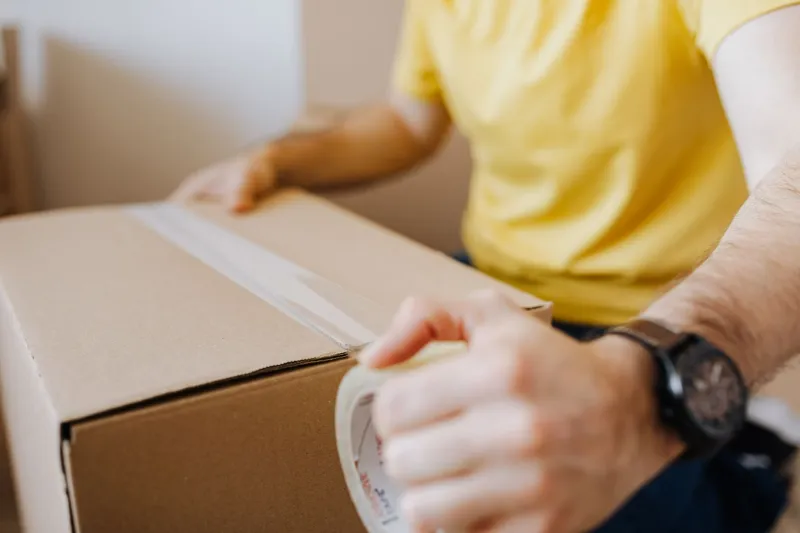
You find a different box. The item doesn't quite fit. You find another box. It's too big. You use the too-big box and fill the extra space with a plastic bag stuffed with other plastic bags, which is a perfectly normal thing to do and not at all embarrassing. You tape the box closed. You run out of tape. You use packing tape that has been in your junk drawer since you moved in and is now more of a suggestion than an adhesive.
The package looks fine. Probably. You tape the label on. It's slightly crooked. You decide this is character.
Phase Five: The Drop-Off
The drop-off location is a UPS store 1.4 miles away. You have been meaning to go for eleven days. Every morning you think today is the day and every evening the box is still on your floor.
Eventually — and this is a victory, acknowledge it — you go. You hand over the box. The person behind the counter scans it without ceremony and gives you a receipt. The whole interaction takes forty-five seconds.
Forty-five seconds.
You stand outside the UPS store and do the math. The return process took you approximately six hours of cumulative effort spread across two weeks. The actual act of returning it took forty-five seconds.
The Refund That May or May Not Come
They said five to seven business days. You check your bank account on day two. Nothing. Day four. Nothing. Day six. Nothing. You open the tracking page. It says "In Transit." You open it again an hour later. Still "In Transit." You wonder if the package has been lost. You wonder if the label being crooked caused a problem. You wonder if you should email someone.
On day eight, the refund appears. You feel a relief disproportionate to the amount of money involved.
You immediately open a new browser tab and start shopping.