The Casual Deception
Somewhere in America, every single day, someone says "just drop by anytime" and means absolutely none of it. Meanwhile, someone else hears "just drop by anytime" and begins an elaborate mental calculation that would impress NASA mission planners.
This phrase has become our society's most universally accepted social fiction. Everyone says it. Nobody means it literally. And yet we all continue participating in this collective delusion like we're part of some elaborate sociological experiment.
The person extending the invitation feels generous and welcoming. The person receiving it feels appreciated but also vaguely threatened. Both parties understand that "anytime" definitely doesn't mean anytime, but neither will acknowledge this obvious truth.
The Translation Matrix
What "drop by anytime" actually means depends on a complex set of variables including your relationship status, geographic proximity, social class, and whether Mercury is in retrograde. Here's the unofficial decoder:
From your boss: This means never. This is corporate politeness designed to make them seem approachable while maintaining absolute boundaries. If you actually drop by their house, you will be fired.
From distant relatives: This means major holidays only, and even then, call first. "Anytime" translates to "Christmas, maybe Thanksgiving, definitely not Tuesday at 3 PM."
From new friends: This is a friendship test disguised as an invitation. They want to see if you understand social boundaries without having to explicitly explain them.
From neighbors: This means "during daylight hours, for emergencies only, and please pretend you didn't see me in my bathrobe."
The Advance Notice Algorithm
Nobody will tell you this, but "drop by anytime" actually requires more advance notice than formal invitations. The casualness of the invitation is inversely proportional to how spontaneous you're allowed to be.
A wedding invitation gives you six weeks notice but tells you exactly when to show up. "Drop by anytime" gives you infinite theoretical availability but requires you to somehow intuit the perfect moment, which may not actually exist.
You start calculating acceptable advance notice windows. Is two hours enough? Too presumptuous? Should you text the day before? The morning of? Are you supposed to provide an estimated arrival time, or would that make it feel too formal and defeat the purpose of the casual invitation?
The Text-Ahead Buffer Zone
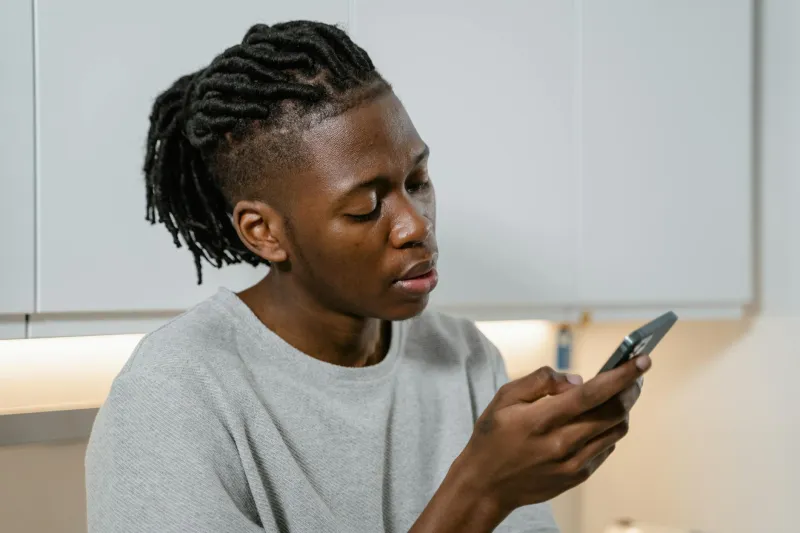
Despite being told you can "drop by anytime," you know that actually dropping by without warning would be a social catastrophe. So you develop the text-ahead strategy: "Hey, I'm in the neighborhood, would now be a good time to stop by?"
This text serves multiple purposes. It maintains the fiction that your visit is spontaneous while giving them plausible deniability to say no. It's like asking permission to use the permission you were already given, which makes perfect sense to no one but is absolutely necessary for social survival.
The acceptable response time to this text is also mysteriously undefined. Too quick and they might think you're desperate. Too slow and the moment has passed. You're basically playing social roulette with your phone.
The Overthinking Spiral
Because nobody explains the actual rules, you start creating your own increasingly elaborate guidelines. Maybe "anytime" means weekends only. Or maybe it means weekdays are better because weekends are family time. Or maybe it means never because they were just being polite.
You begin analyzing their lifestyle patterns like you're planning a heist. When do they usually get home from work? Are they morning people or night owls? Do they seem like the type who enjoys surprise visitors, or are they secretly introverted and already regretting the invitation?
You start looking for clues in their social media posts. Did they just post about being tired? Probably not a good time to drop by. Did they post about having a great day? Maybe that's the window.
The Mutual Pretense
The beautiful absurdity is that both parties continue pretending this system makes sense. The inviter keeps saying "you should come by more often" while secretly hoping you'll continue to provide advance notice. The invitee keeps saying "I don't want to impose" while secretly wishing someone would just tell them when it's actually okay to show up.
It's like an elaborate dance where both people know the steps are made up, but neither wants to be the first to admit they have no idea what they're doing.
The Guilt Complex
The longer you wait to take someone up on their "anytime" invitation, the more complicated it becomes. Now you're not just planning a casual visit, you're addressing the fact that you haven't taken advantage of their generous offer.
You start feeling guilty about not dropping by, which makes the eventual visit feel weighted with obligation rather than spontaneity. What was meant to be casual has become a social debt that needs to be paid.
The Nuclear Option
Eventually, some brave soul actually shows up unannounced, treating "anytime" like it means anytime. This person becomes a legend in social circles, talked about in hushed tones as either admirably confident or completely unhinged.
They either get lucky and catch their host at the perfect moment, becoming the exception that proves the rule, or they create an awkward situation that confirms everyone's suspicions that "anytime" is indeed a carefully coded message that definitely doesn't mean anytime.
The International Incident
The most challenging scenario occurs when someone from a culture that treats "drop by anytime" literally encounters someone from a culture where it's purely ceremonial politeness. This creates a diplomatic crisis that requires careful navigation by all parties involved.
Neither person is wrong, but both people are confused, and everyone learns that "anytime" might be the most culturally specific non-specific invitation ever invented.
The Resolution That Never Comes
The truth is, nobody will ever clarify what "drop by anytime" actually means because doing so would require admitting that we've all been participating in this elaborate social charade. We're committed to maintaining the fiction that casual invitations are actually casual, even though they require more planning than formal events.
So we continue this beautiful, ridiculous dance, extending invitations we don't quite mean and accepting invitations we don't quite understand, all while pretending that "anytime" is a perfectly reasonable way to coordinate human social interaction.
And somehow, despite the complete absence of clear communication, it works just enough to keep the system running.