The Supreme Court Case That Happens Before You Disturb Another Human
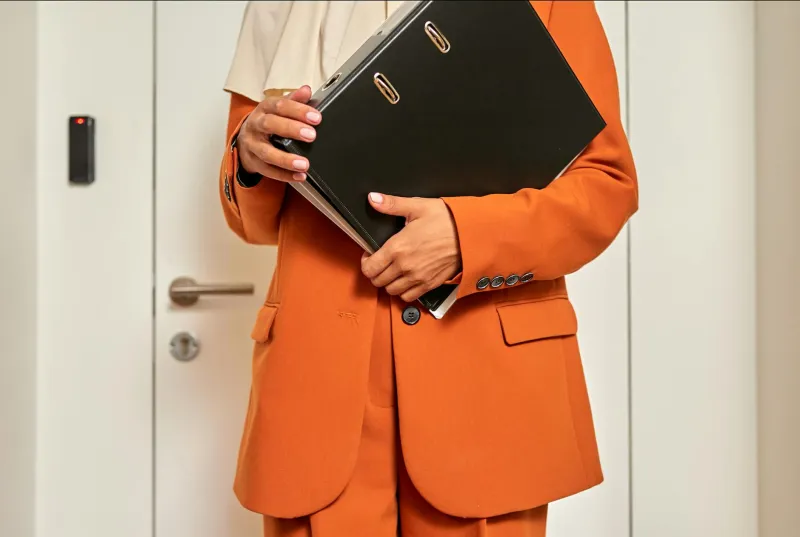
Opening Arguments in the Case of You vs. A Closed Door
Every day, millions of Americans approach closed doors and immediately transform into constitutional scholars, conducting rapid-fire legal proceedings that would make the Supreme Court jealous. The defendant: a simple wooden barrier. The plaintiff: your basic human need to communicate. The stakes: your entire social reputation.
Welcome to the most overthought three seconds in human experience.
Exhibit A: The Timing Deliberation
The first order of business in any door-knocking case involves establishing temporal jurisdiction. Is this an appropriate time to interrupt another human being's existence? The evidence must be weighed:
- Current time: 2:47 PM (acceptable)
- Last known activity: saw them walk in there 12 minutes ago (probably not in a meeting)
- Door status: closed but not locked (mixed signals)
- Background noise: typing sounds (could be important work or just aggressive Pinterest browsing)
Your internal legal team immediately splits into factions. The prosecution argues that normal business hours grant you knocking privileges. The defense counters that the closed door is clearly a "Do Not Disturb" sign that transcends time zones.
Meanwhile, you're still standing there like a statue, three feet from a door, conducting a full evidentiary hearing about whether 2:47 PM falls within acceptable interruption parameters.
The Constitutional Crisis of Knock Volume
Assuming you clear the timing hurdle, you're immediately faced with the most complex acoustical legal framework known to humanity. How loud is too loud? How soft is too soft? You're basically trying to thread a needle while blindfolded and riding a unicycle.
Too quiet, and you'll have to knock again, creating the dreaded "double knock" situation that implies either hearing impairment or passive aggression. Too loud, and you'll be branded as the office barbarian who announces their presence like a battering ram.
The middle ground—that perfect medium knock—requires the precision of a Swiss watchmaker and the intuition of a wine sommelier. You find yourself practicing test knocks in the air, conducting a full percussion rehearsal for an audience of zero.
The Precedent-Setting Pattern Protocol
Legal scholars have debated knock patterns for centuries. Three quick knocks suggest urgency but respect boundaries. Two knocks seem too casual, like you're selling magazine subscriptions. Four knocks venture into "police raid" territory.
Then there's the rhythm consideration. Rapid-fire knocks signal emergency. Slow, deliberate knocks suggest you're either very important or potentially unhinged. The spacing between knocks becomes a complex musical composition that somehow needs to communicate your exact level of need and respect simultaneously.
You stand there running through knock patterns like you're preparing for a percussion audition, while the person inside remains blissfully unaware that you've been conducting a full legal review of their door for the past ninety seconds.
The Alternative Communication Crisis
Just as you're about to commit to a knock pattern, your legal team introduces new evidence: you could just text them. This revelation throws the entire case into chaos.
Suddenly you're weighing the constitutional implications of digital versus analog communication. Texting seems less intrusive, but what if they don't check their phone? What if your text gets lost in a sea of notifications? What if they see you standing outside their door AND get your text, creating an awkward communication redundancy?
The text option opens an entirely new legal frontier. Do you knock AND text? Text first and then knock? Knock first and follow up with a text explaining why you knocked?
You're basically trying to solve international diplomacy while holding your phone in one hand and staring at a door handle.
The Doorbell Dilemma
If you're dealing with residential property, the doorbell introduces additional constitutional complexities. The doorbell is technically designed for this exact purpose, but somehow using it feels more aggressive than knocking. It's louder, more official, harder to ignore.
But what if the doorbell doesn't work? What if it's one of those doorbells that plays a full musical composition, turning your simple "hello" into a Broadway production? What if they have one of those video doorbells, and now there's permanent evidence of you standing on their porch having a legal crisis?
The doorbell versus knock debate could fuel law school dissertations for decades.
The Existential Appeals Court
As your door-knocking deliberations enter their second minute, deeper philosophical questions emerge. Do you actually need to talk to this person right now? Could this conversation wait until you naturally encounter them in the hallway? Are you just knocking because you're procrastinating on something else?
Your internal appeals court starts questioning the entire premise of the case. Maybe the real legal issue isn't how to knock, but whether you should be knocking at all.
This is when the full existential weight of human interaction crashes down on you. You're standing outside someone's door, conducting a complete philosophical review of communication, social boundaries, and the nature of interruption itself.
The Anticlimactic Verdict
After conducting the most thorough legal review in human history, you finally knock. Three medium-volume knocks in a standard pattern, delivered with the confidence of someone who definitely didn't just spend three minutes having a constitutional crisis in the hallway.
"Come in!" they say immediately.
They had no idea you were out there. They weren't in an important meeting. They weren't busy with critical work. They were probably just sitting there, perfectly available for interruption, while you conducted a full Supreme Court case about whether disturbing them would violate the Geneva Convention.
The person inside your target location had no awareness of your elaborate legal proceedings. They didn't know you'd weighed seventeen different factors before deciding to knock. They have no idea you considered texting, calling, waiting until later, or just walking away entirely.
To them, someone knocked on their door and they said "come in." To you, you just concluded the most complex legal case in modern history.
And tomorrow, you'll do it all over again.