The Sacred Brotherhood of Shotgun: A Legal Analysis of Front Seat Democracy
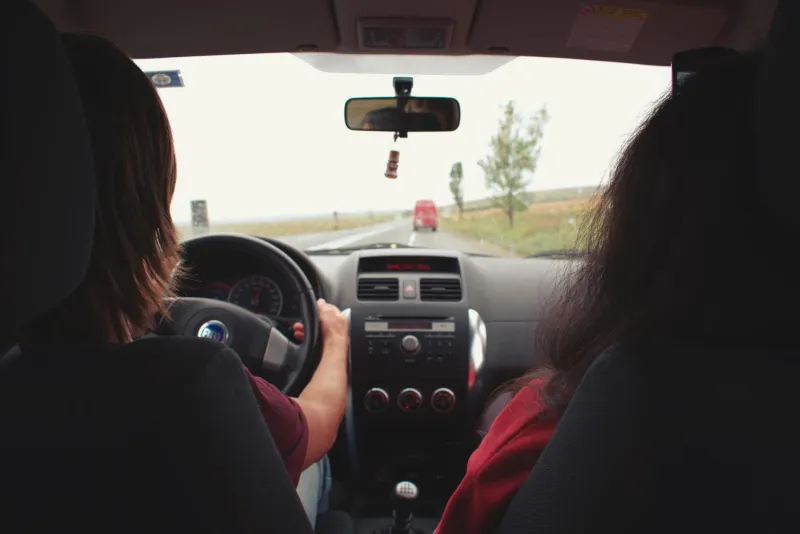
Article I: The Right to Musical Sovereignty
The moment you slide into the passenger seat, you inherit a responsibility more sacred than jury duty: the stewardship of the aux cord. This isn't just about playing DJ—you're now the cultural ambassador for everyone's collective mood, the guardian of group harmony, and somehow responsible for reading the driver's mind about whether they want early 2000s pop or something that won't make them feel ancient.
You'll spend the first three songs in a careful diplomatic dance, testing the waters with something universally acceptable (probably that one song everyone knows but pretends they don't love), watching the driver's face for micro-expressions of approval or the subtle eye-twitch that means you've chosen poorly.
Article II: The Recline Clause and Other Spatial Negotiations
There exists an unspoken physics equation governing passenger seat recline: the angle of your comfort must never exceed the driver's ability to see you in their peripheral vision. Lean back too far, and you've essentially vanished from the social contract of the journey. You're no longer a co-pilot; you're cargo with opinions.
The armrest becomes a Switzerland of personal space—neutral territory that somehow both parties claim while pretending they don't notice the other person's elbow. And don't even think about adjusting the air conditioning without conducting a full diplomatic summit first.
Article III: The Vigilance Amendment
Perhaps the most crucial responsibility of riding shotgun is the unspoken agreement to remain conscious for the duration of the journey. Falling asleep in the passenger seat is the ultimate betrayal—you've abandoned your post as navigator, conversation partner, and the driver's primary defense against highway hypnosis.
You'll find yourself fighting sleep with the determination of a caffeine-powered sentinel, even when the conversation died somewhere around mile marker 47 and you're both just listening to the same Spotify playlist on shuffle for the third time.
Article IV: The Navigation Paradox
Despite living in the age of GPS, the passenger maintains the ancient duty of being a human MapQuest. You're expected to know shortcuts the phone doesn't, anticipate traffic patterns like some sort of asphalt psychic, and somehow divine which exit the driver means when they vaguely gesture and say "that one coming up."
You'll develop an intimate relationship with Google Maps that borders on codependency, refreshing it obsessively and providing updates nobody asked for: "Still eleven minutes away," "Traffic's looking good," "Oh wait, now it's twelve minutes."
Article V: The Snack Sharing Statute
Any food brought into the vehicle automatically becomes community property, governed by complex sharing protocols that would make international trade lawyers weep. The passenger controls distribution but must gauge everyone's hunger levels, dietary restrictions, and the mysterious social calculus of who deserves the last good piece.
You'll find yourself rationing trail mix like you're managing wartime supplies, mentally calculating whether there are enough chocolate chips to go around and debating the ethics of eating all the good nuts first.
Article VI: The Conversation Maintenance Mandate
As shotgun, you're the Chief Entertainment Officer, responsible for maintaining dialogue during awkward silences and knowing when to let comfortable quiet exist. You'll develop an encyclopedic knowledge of conversation starters, from asking about weekend plans to commenting on literally any building you pass.
The pressure intensifies when there are backseat passengers who've gone silent—suddenly you're a one-person variety show, desperately mining your life for amusing anecdotes while monitoring the driver's energy levels and calculating how many more hours you need to stay interesting.
Article VII: The Window Management Doctrine
Your window isn't just your window—it's the group's primary source of fresh air, the designated photo opportunity portal, and somehow your responsibility to monitor for weather changes. You'll become a meteorologist by necessity, providing real-time updates on cloud formations and making executive decisions about whether that approaching storm looks serious.
The window also serves as your escape hatch from uncomfortable conversations, giving you something to stare at pensively while everyone pretends the silence isn't getting weird.
The Unwritten Enforcement Mechanisms
Violate these sacred protocols, and you'll face the harshest punishment known to carpool society: being relegated to the middle seat in the back. There, squeezed between two people who both claim the armrests, you'll have plenty of time to contemplate your failures as a passenger and plot your redemption arc for the return journey.
The beauty of this system is that nobody taught it to us—we absorbed these rules through cultural osmosis, like learning to say "bless you" after sneezes or knowing that the person who suggests splitting the check is always the one who ordered the most expensive thing.
The Sacred Trust
Ultimately, riding shotgun is about more than transportation—it's about being trusted with the driver's sanity, safety, and Spotify account. You're the co-captain of a tiny democracy on wheels, where every decision from temperature control to bathroom breaks requires unanimous consent.
So the next time you claim that front seat, remember: you're not just along for the ride. You're entering into a social contract older than GPS, more complex than international law, and more sacred than anything written down. You're becoming part of the ancient brotherhood of shotgun—may your aux cord selections be wise and your navigation skills be true.