A Field Guide to the American Grocery Store, Where Everyone Is Slightly Feral
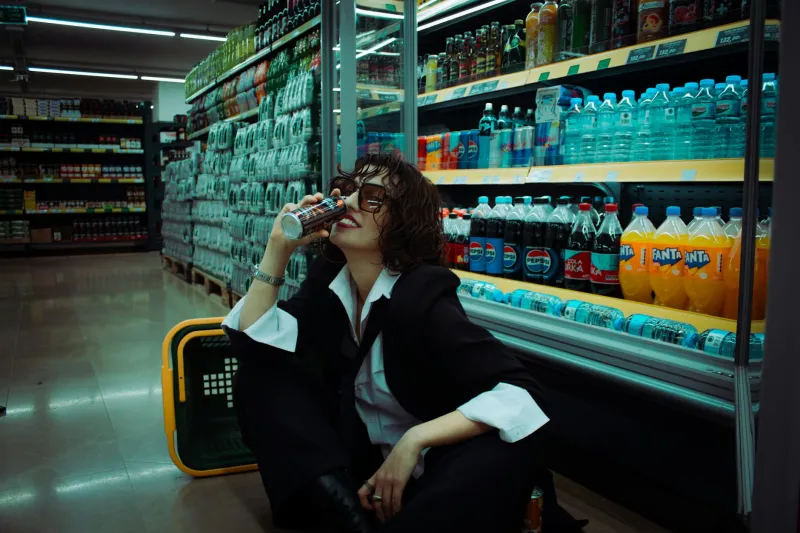
A Field Guide to the American Grocery Store, Where Everyone Is Slightly Feral
Narrated in the style of someone who has been personally humiliated by a self-checkout machine.
Observe, if you will, the American supermarket. Fluorescent-lit. Faintly cold. Smelling of rotisserie chicken and quiet desperation. On the surface, it appears to be a simple commercial space where people exchange money for food.
It is not. It is a complex social ecosystem governed entirely by unwritten rules that no one taught you, that everyone somehow knows, and that will be silently enforced against you the moment you violate one.
Welcome. Please keep your cart to the right.
The Parking Lot: Where It Begins
The experience starts before you even enter the building. The grocery store parking lot operates on a social contract so delicate that a single hesitation can unravel it completely.
There is a person waiting for a spot. They have been waiting — turn signal on, car idling — for the past ninety seconds while someone loads their trunk with the specific slowness of a person who has nowhere else to be. The waiting driver has accepted this. They are patient. They are civilized.
Then you pull in from the other direction and take a completely different spot that was never part of this arrangement.
You have done nothing wrong. The unwritten law, however, is clear: you have done something wrong. The original driver stares at you for just a moment longer than a casual glance. You feel it. You walk into the store carrying a mild, sourceless guilt that will follow you through produce.
The Cart Selection Ritual
You approach the cart corral. This should be simple. It is not simple. The carts are nested together in a way that makes it physically unclear which one you're supposed to take. You pull. Three come with you. You wrestle two back. A cart wheel is making a sound like a small animal in distress, but you've already committed to this cart and switching now feels like admitting defeat.
You enter the store with the loudest cart in the building. Everyone turns. You push forward with dignity.
The Produce Section: A Study in Performance
This is where the most elaborate theater takes place. Everyone in produce is performing the role of someone who knows exactly what they're doing. People squeeze avocados with the focused authority of a produce sommelier. They hold peaches up to the light. They examine heads of lettuce for flaws that only they can detect.
The truth — and everyone in that section knows this — is that most of us cannot reliably tell if an avocado is ripe. We are guessing. We have always been guessing. The squeezing is a ritual, not a science. We do it anyway because stopping to read the little sign that explains ripeness would be an admission of vulnerability, and this is not that kind of store.
The Aisle Standoff
At some point in every grocery trip, you will round a corner and find another shopper stopped directly in the middle of the aisle, studying a label with the intensity of someone decoding ancient text. Their cart is positioned at a 40-degree angle that blocks passage in both directions. They are not aware of you. They are in label world.
You slow your approach. You stop. You wait. Five seconds pass. You do a small, unconvincing cough. Nothing. You reach for something on the nearby shelf that you do not need, performing busyness while you wait. Ten seconds. You consider saying "excuse me" but something about the depth of their concentration makes it feel rude, like interrupting a meditation.
You back up. You take the long way around. You have now added three minutes to your trip to avoid a two-second social interaction, and this feels completely reasonable.
The Express Lane: Society's Most Contested Border
Fifteen items or fewer. Fifteen. The number is posted. The number is clear. And yet.
You count the items in the cart ahead of you. You count them again. You are at seventeen, conservatively. You look at the cashier to see if they're going to say something. They are not going to say something. You look at the person with seventeen items. They are looking straight ahead, radiating the specific energy of someone who has decided that this is not happening.
You say nothing. Everyone says nothing. This is the express lane social contract: the rule exists, the violation is visible, and the collective agreement is to let it go while silently cataloguing it as a personal moral failing of the offender.
You will tell someone about this later. You will say "like, fifteen items, and they had at least twenty." The number will grow with each retelling.
The Self-Checkout: A Humbling
You chose self-checkout because the lines were long and you have eight items and confidence. The confidence is misplaced.
"Please place the item in the bagging area." You place the item in the bagging area. "Unexpected item in the bagging area." You stare at the machine. The machine stares back. You remove the item. You replace the item. "Please wait for assistance."
A light begins blinking above your station. A store employee materializes — not rushing, never rushing — to press a single button and walk away. The machine accepts this and continues. You do not know what the button did. You will never know what the button did.
You finish the transaction, take your receipt, and walk out into the parking lot a slightly different person than when you arrived. Humbler. More aware of your own limitations.
You forgot the one thing you came for. You will not go back in.
Same, tbh.