Everyone Got the Adult Manual But You, and Nobody's Talking About It
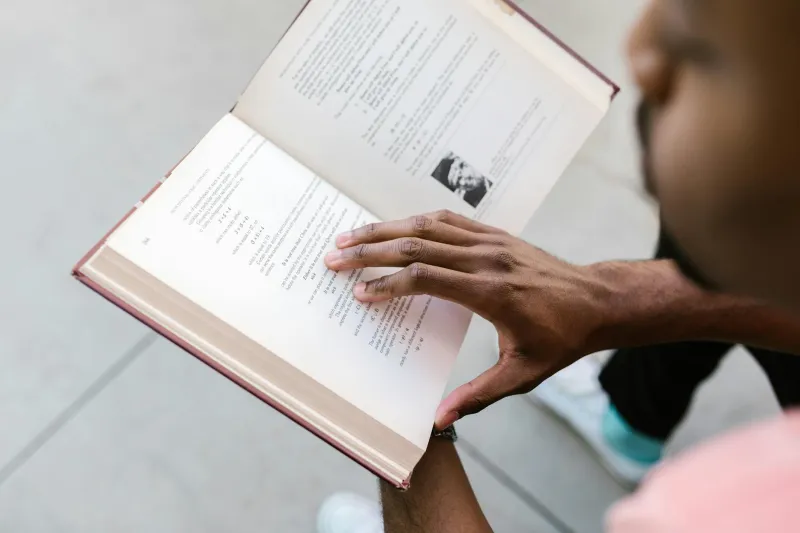
The Great Distribution Mystery
There must have been a day—probably sometime in your early twenties—when a official-looking person in a crisp suit went door-to-door handing out leather-bound copies of "The Complete Guide to Adult Human Behavior, Revised Edition." You were obviously out getting coffee or stuck in traffic, because you never got yours.
Meanwhile, everyone else is walking around with this invisible handbook, confidently navigating situations that leave you paralyzed with uncertainty. They know exactly how much to tip the coffee barista (apparently it's different from restaurant tipping?), when a text requires an immediate response versus when you should wait precisely three hours, and whether "business casual" means khakis or if khakis are actually too casual for business casual.
You, on the other hand, are basically improvising your way through adult life like you're in the world's longest improv show where the theme is "pretend you know what you're doing" and everyone else got to rehearse.
The Tipping Enigma
Let's start with tipping, because this is clearly covered in Chapter One of everyone else's manual. Somehow, the entire American population collectively agreed on a complex mathematical system that varies by service industry, geographic location, and mysterious factors that nobody ever explained to you.
Restaurant servers get 18-20%. Got it. But what about the person who hands you a coffee? The manual holders seem to know this instinctively, casually dropping dollar bills or confidently selecting "20%" on the iPad that's been aggressively rotated toward you. You're standing there doing mental math while everyone behind you in line silently judges your calculation speed.
And don't even get started on hairdressers. Is it 20% of the pre-tax amount? Post-tax? Do you tip the shampoo person separately? What if multiple people worked on your hair? You've been getting the same haircut for five years primarily to avoid having to figure out the tipping protocol for a new salon.
The Communication Time-Space Continuum
Chapter Two of the manual apparently covers "Appropriate Response Times for Digital Communication," and it's clearly a complex document. Everyone else seems to understand that texts should be answered within 2-4 hours unless they contain questions, which require immediate responses, unless the question is "what's up?" which can be ignored for up to 24 hours.
Emails operate on a completely different temporal system. Work emails need same-day responses, but personal emails can marinate for a week. Unless they're from your parents, in which case the response window is somewhere between immediately and never, depending on the content.
You've spent actual hours crafting responses to simple messages, overthinking every emoji choice and wondering if your tone sounds too casual or too formal. Meanwhile, your friends are firing off perfectly calibrated responses like they have a team of social media managers living in their phones.
The Dress Code Decoder Ring
The clothing section of the manual is apparently written in hieroglyphics. "Business casual" could mean anything from "jeans and a nice shirt" to "slacks and a blazer but not too blazer-y." You've shown up to events both overdressed and underdressed, sometimes simultaneously.
"Cocktail attire" is even worse. Is it a little black dress or a full evening gown? Can men wear khakis or is that social suicide? You've googled "cocktail attire examples" so many times that your targeted ads now assume you're either a party planner or having a prolonged identity crisis.
The worst part is when someone says "just wear whatever," which is clearly code for something specific that everyone else understands but you don't. "Whatever" apparently means "the exact right thing that I'm not going to specify but will judge you for getting wrong."
The Social Interaction Flowchart
Chapter Four must cover the intricate dance of human greetings. When do you wave? When does a wave become a handshake? At what level of familiarity does a handshake become a hug? And what's the protocol when you go in for a handshake but they're expecting a hug?
Everyone else seems to have an internal GPS system for social interactions. They know exactly when to end conversations without being rude, how to gracefully exit group chats, and when "let's grab coffee sometime" is a genuine invitation versus a polite way to end a conversation.
You're over here treating every social interaction like a choose-your-own-adventure book where all the choices lead to mild embarrassment.
The Professional Persona Playbook
The workplace section of the manual is clearly extensive. Your colleagues know exactly how casual to be in meetings, when to speak up, and how to network without seeming desperate or antisocial. They understand the subtle art of looking busy without actually working, and they've mastered the professional email signature that strikes the perfect balance between approachable and competent.
You're still trying to figure out if it's weird to eat lunch alone at your desk or if you should force yourself to socialize in the break room. Your email signature has remained unchanged for three years because you're afraid any modification will somehow reveal that you have no idea what you're doing.
The Unspoken Conspiracy
The most frustrating part is that nobody acknowledges the existence of this manual. When you ask questions like "How did you know to do that?" or "What's the normal thing to do in this situation?" people look at you like you've asked them to explain gravity.
"I don't know, I just... figured it out," they say, which is clearly a lie. Nobody just figures out that you're supposed to bring wine to a dinner party but not beer, or that "let's play it by ear" means "we're definitely not doing this but I don't want to hurt your feelings by saying no directly."
The truth is, we're all improvising. The manual doesn't exist. Everyone is just copying what they think everyone else is doing, creating an elaborate performance of adult competency that we're all desperately trying to maintain.
But hey, at least you're not alone in feeling like you missed the orientation session for being human. We're all just winging it and hoping nobody notices. And honestly? That might be the most adult thing of all.