The Five-Stage Grief Cycle of Deciding to Cook Dinner
Stage One: The Optimism (5:47 PM)
It hits you on the drive home from work, or while you're sitting at your desk, or in that weird moment between "I should eat something" and "I'm too tired to think about food."
Tonight is different. Tonight, you're going to cook.
Not just cook—you're going to make something. Something with actual ingredients. Something that requires chopping. Something that uses more than one pan. Something that will make your kitchen smell like a place where adults live and make intentional decisions about nutrition.
You can feel the confidence. It's real. It's palpable. You're already imagining how satisfied you'll feel, fork in hand, eating something you created with your own two hands. You're imagining telling someone about it. "Oh, I made pasta last night. From scratch. Well, not the pasta itself, but I made the sauce." That's basically from scratch.
You open your notes app. You're going to make a list. A real grocery list. This is what organized people do.
The future is bright. The future is home-cooked. The future is you, standing in your kitchen, looking like someone who has their life together.
Stage Two: The Research (6:03 PM – 6:41 PM)
Now comes the fun part: deciding what to cook.
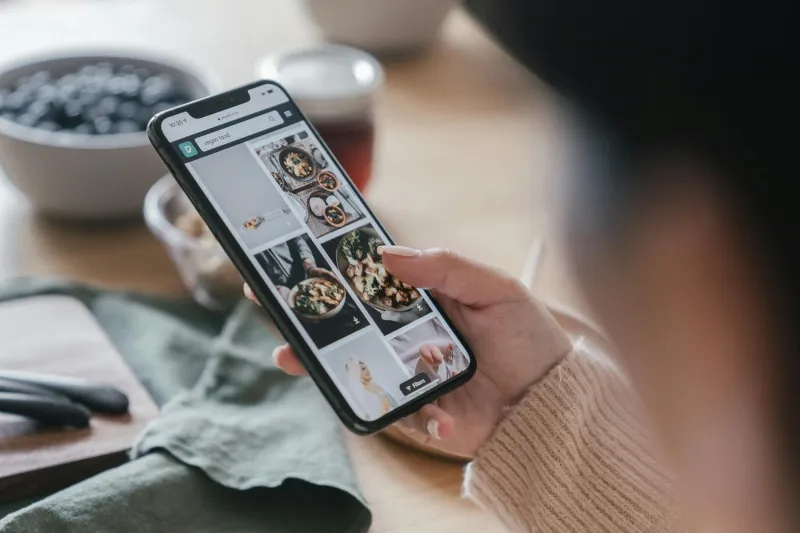
You open your phone. You open a recipe app. You open another recipe app. You open a cooking website. You open three cooking websites because the first one had a recipe that looked good but then you saw a comment that said "this was dry" and now you don't trust it.
You're scrolling. Scrolling. Looking for something that sounds:
- Easy (but not too easy, because you want to feel accomplished)
- Healthy (but still delicious, because you're not a masochist)
- Relatively quick (under 45 minutes, ideally)
- Made with ingredients you "probably have"
That last part is key. You're not trying to go to the store. You're trying to cook with what you have. This is what makes it realistic. This is what makes it happen.
You find something. It looks perfect. It has a picture. The picture is beautiful. Someone has plated it nicely and taken a professional photograph, and you're convinced that if you follow the recipe, your version will look approximately 85% as good as the picture.
You read the ingredients list:
- Chicken breast
- Garlic
- Olive oil
- Lemon
- Fresh thyme
- Salt
- Pepper
You have... chicken. You have salt. You have pepper. You're pretty sure there's olive oil somewhere. The rest of it? The rest of it is negotiable.
You click on a different recipe.
This one requires:
- Ground beef
- Onions
- Garlic
- Tomato sauce
- Pasta
You have pasta. You might have onions. Garlic is... somewhere. Ground beef is in the freezer, possibly. This could work.
But then you see another recipe. This one has 47,000 five-star reviews. 47,000 people have made this and loved it. 47,000 people can't be wrong.
It requires:
- Shrimp
- Coconut milk
- Red curry paste
- Lime
- Fish sauce
- Basil
You don't have any of these things.
You spend the next 38 minutes scrolling through recipes you will never make, reading reviews you will never need, and watching video tutorials you will never watch all the way through.
At some point, you realize that you've been researching for almost 40 minutes and you still haven't decided what to cook.
You are not the type of person who cooks from scratch. You are the type of person who researches cooking from scratch.
But you push forward.
Stage Three: The Inventory Crisis (6:42 PM – 6:58 PM)
You decide on a recipe. You commit. This is happening.
Now you need to check what you actually have.
You go to your kitchen. You open your refrigerator. You assess the situation. There is:
- Some vegetables that might be vegetables or might be science experiments at this point
- Condiments
- Something in a container that you're not opening
- Milk
- Butter
You open your pantry. There is:
- Pasta (three types, all opened, all half-full)
- Canned beans
- Canned tomatoes
- Spices you bought for a recipe you never made
- Rice
- Cereal
- A jar of something you don't remember buying
You look back at your recipe. It requires:
- Chicken breast (you have frozen chicken, which is close)
- Garlic (you have garlic powder, which is not the same, but it's close)
- Olive oil (you have this)
- Lemon (you do not have this)
- Fresh thyme (you do not have this)
- Salt (you have this)
- Pepper (you have this)
So you're missing two things. Or three, if you count "fresh thyme" as different from "dried thyme," which it is, but you're trying not to think about that.
You have two options:
- Go to the store
- Substitute
Going to the store means getting in your car, driving to the store, waiting in line, and spending money. It means the whole process takes another hour. It means you won't eat until 8:30 PM.
Substituting means using what you have and hoping for the best.
You choose to substitute.
This is where the problem begins.
Stage Four: The Substitution Spiral (6:59 PM – 7:23 PM)
No lemon? You have lime-flavored hot sauce. That's basically lemon.
No fresh thyme? Dried thyme is still thyme. It's just... concentrated. You'll use less.
No garlic? You have garlic powder. Garlic powder is dehydrated garlic. It's the same thing, just more convenient.
You're now convinced that you can make this recipe work with what you have. You're already in the kitchen. You've already mentally committed. You've already imagined how good it's going to be.
You start cooking.
You defrost the chicken. You put it in a pan. You add olive oil. You add garlic powder. You add dried thyme. You add a splash of lime-flavored hot sauce because, sure, why not.
It smells... weird.
It smells like you're making a mistake.
You take a taste.
It tastes like a mistake.
You're 15 minutes into cooking a meal that will take another 20 minutes, and you already know it's not going to be good. You already know that you've wasted this time and this chicken and this energy.
You consider your options:
- Keep going and eat something mediocre
- Throw it away and order delivery
You stare at the pan for a long time.
You think about how much time you've already invested. The research. The decision-making. The cooking. It's been an hour and a half of your evening, and you haven't eaten yet.
You think about how tired you are.
You think about how ordering delivery would take 30 minutes, and you'd have food in 30 minutes, and it would taste good, and you wouldn't have to eat whatever this is.
Stage Five: The Acceptance (7:24 PM)
You pull out your phone.
You open the delivery app.
You order something that's going to arrive in 28 minutes.
You throw the chicken in a container. You'll eat it for lunch tomorrow, or you'll throw it away tomorrow. You haven't decided yet. You're not thinking about tomorrow.
You're thinking about how you just spent 97 minutes trying to cook dinner, and you're going to eat something someone else cooked in 28 minutes, and the someone else cooked it better.
You clean up the pan. You wipe down the counter. You return to your couch.
Your food arrives. It's good. It tastes like it was made by someone who knows what they're doing. Someone who has the right ingredients and the right tools and the right amount of energy to care about how it turns out.
You eat it sitting on your couch, scrolling on your phone, thinking about how tomorrow you're going to cook at home.
You're going to be that person.
You're going to be so organized. You're going to make a real list. You're going to go to the store and buy the right ingredients. You're going to come home and cook something delicious.
Tomorrow night is going to be different.
Tomorrow night, you're going to cook.
You're already looking forward to it.
You're already imagining the delivery app opening on your phone, 97 minutes from now, as you stare at a pan of something that didn't turn out the way you planned.