The Check-Grab Standoff: A Diplomatic Crisis Disguised as a Nice Dinner
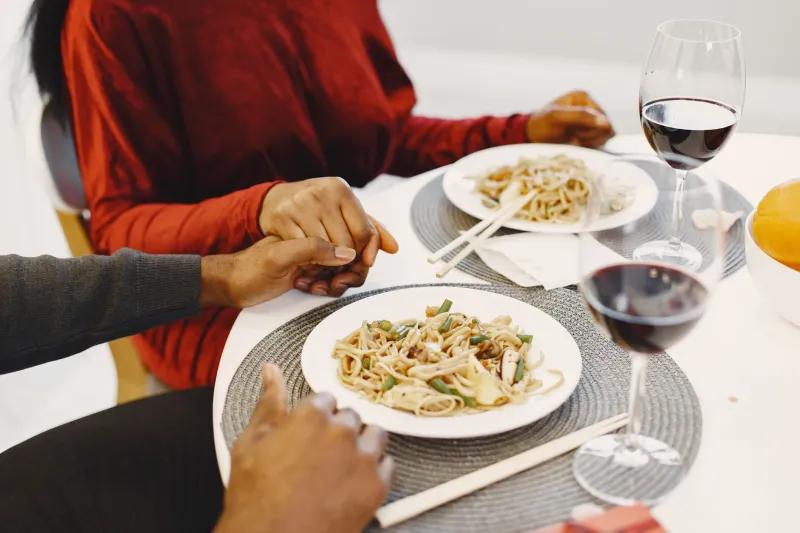
The meal was great. The conversation was great. The dessert was maybe one item too many but you're not going to regret it. Everything has been genuinely lovely. And then the server places the check on the table and the entire energy of the evening shifts in a way that is difficult to explain but immediately recognizable to every American who has ever eaten at a restaurant with another human being.
The Check Grab Standoff has begun.
What follows is not a fight. It is not even a disagreement. It is something far more complex — a highly choreographed ritual of competitive generosity, governed by invisible rules, performed with the intensity of a UN Security Council session, and ultimately resolved through a combination of timing, persistence, and whoever has faster reflexes.
The Opening Gambit: The Casual Reach
The first move is almost always the same. One person does what can only be described as the Casual Reach — a slow, unhurried extension of the arm toward the check folder that is designed to look spontaneous but was clearly planned approximately four minutes ago when the entrée plates were cleared.
The Casual Reach communicates two things simultaneously: I am paying and this is not a big deal, please don't make it a big deal. It is a masterpiece of social misdirection.
The other person, who has also been planning their move since the entrée plates were cleared, immediately counters. Their hand arrives at the folder at roughly the same moment. There is brief physical contact with the check. Both parties now have partial possession of a small leather rectangle that contains a bill for sixty-three dollars and some change.
Round one has produced no winner. Negotiations will now escalate.
The 'No, Seriously' Exchange
This is the verbal phase, and it follows a script so consistent you could set it to music.
'No no no, I've got this.'
'No, seriously, let me — you got it last time.'
'Did I? I don't even remember.' (They remember.)
'You definitely did. I've got this one.'
'Are you sure?'
This last question is a trap. 'Are you sure?' sounds like an offer of an exit ramp, but it is actually a test. If the other person says yes, I'm sure too quickly, they lose moral authority. The correct response is to insist again, slightly more firmly, to demonstrate that this is a genuine desire to pay and not merely a social performance.
Both parties know this. Both parties are performing anyway. The performance is the point.
The Fake Wallet Reach
If the verbal exchange fails to produce a resolution, one or both parties will deploy the Fake Wallet Reach. This is the act of reaching toward your pocket or bag as though you are about to contribute, while your entire body language communicates that you are hoping to be stopped before you get there.
The Fake Wallet Reach is not deceptive, exactly. Everyone at the table understands what it is. It functions more like a signal — a way of saying I am willing to pay, I want you to know I am willing to pay, but I am also giving you one more opportunity to handle this. It is generous and slightly theatrical and completely sincere all at once.
Sometimes both people do the Fake Wallet Reach simultaneously, which creates a brief moment of pure social absurdity where two adults are both slowly reaching for their respective wallets while making eye contact and hoping the other one stops first.
The Rules Nobody Wrote But Everyone Knows
There is an unspoken protocol to all of this, and violations are noticed even if they're never mentioned.
You cannot accept on the first offer. Accepting on the first offer signals that you were waiting to be offered, which retroactively makes the other person's generosity feel slightly less like a gift and more like a service you expected. One round of protest is the minimum. Two is standard. Three is reserved for situations where the bill is particularly large or the relationship is particularly close.
You also cannot protest more than three times. Four rounds of no, I insist tips over from gracious into stubborn, and now the generous act has become a minor inconvenience for everyone involved including the server who has been hovering nearby wondering if they should just come back.
And there is always the Split Suggestion — the nuclear option deployed when the standoff has gone on too long and someone needs to end it. 'Should we just split it?' Both parties will usually agree immediately, with visible relief, as though this solution had never occurred to either of them despite being the most obvious outcome available from the beginning.
The Resolution and the Deferred Debt
Eventually, someone pays. The check disappears. The folder closes. The war ends.
But it does not truly end. The person who didn't pay now carries a quiet social debt that will resurface the next time you're both at a restaurant. They will remember. They will be ready. They have been mentally rehearsing their Casual Reach since the drive home.
This is how it works. This is how it has always worked. The check grab standoff is not a problem to be solved. It is a ritual to be honored — a small, slightly ridiculous proof that two people care enough about each other to fight, politely and repeatedly, over who gets to spend sixty-three dollars on the other one.
Same, tbh.