Your Brain Has Been Quietly Writing a 90-Page Analysis of That One Thing You Said in 2021
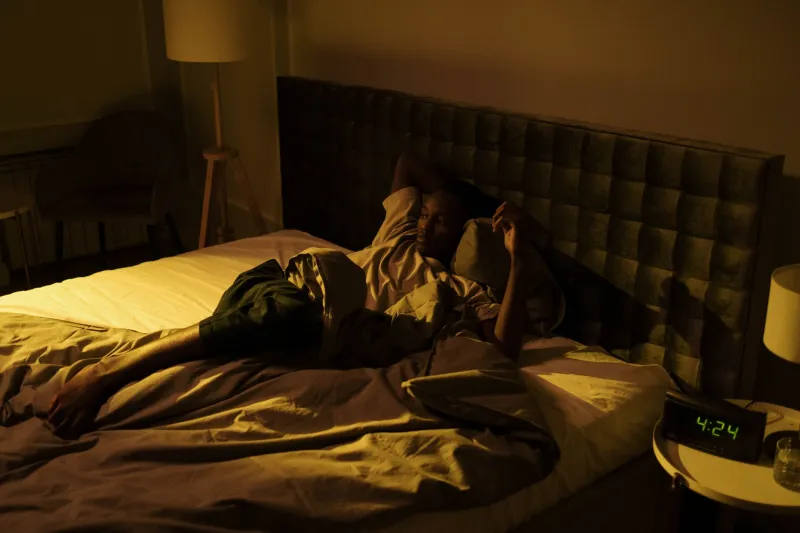
You didn't ask for this. You were doing something completely unrelated — rinsing conditioner out of your hair, or staring at the ceiling at 1 a.m., or driving on the highway with the music on — when your brain, entirely without permission, opened a file it has apparently been maintaining in the background for years.
The file contains a moment. A specific, minor, mostly-forgotten moment in which you said something slightly off. Not offensive. Not catastrophic. Just a little weird. Maybe you laughed at something a beat too late. Maybe you called your professor "Mom" in front of the entire class in 2019. Maybe you confidently mispronounced a word at a dinner party and didn't realize it until you were already in your car.
Your brain has kept the footage. It has been waiting for the right moment to play it back.
That moment is now. For no reason. Enjoy.
The Incident Itself
Let's reconstruct it, since your brain is going to anyway.
It was a work happy hour — or a family gathering, or a first date, or a group project meeting, the specific venue doesn't matter. You said something. At the time, it felt fine. Maybe slightly off, but survivable. You moved on. Life continued. Nobody brought it up again.
But your brain was already building the case file.
The memory your brain stores is not quite the memory as it happened. It has been processed. The other person's expression has been slightly exaggerated. Their pause before responding has been extended by approximately 200 milliseconds. Your word choice has been made to sound worse in retrospect. The ambient lighting, somehow, has become more accusatory.
Your brain is not a neutral archivist. It is an editor with an agenda.
The Analysis Phase
Once the memory has been retrieved and played, the analysis begins. This is the part that takes a while.
First, a full review of what you actually said, delivered in slow motion. Then a contextual breakdown of why you said it, which leads nowhere useful. Then a detailed inventory of what you should have said instead — a list that is always, somehow, perfectly witty and articulate in retrospect, as though your brain has had three years to workshop the response and still didn't think to use it at the time.
The alternative dialogues are extraordinary. In the version where you get it right, you are composed, funny, and immediately beloved. The room laughs warmly. Someone says "that's exactly right." You make a lasting impression. This version of events did not happen, but your brain renders it in full HD anyway, which mostly just makes you sad.
Then comes the escalation phase, in which your brain moves from analyzing what you said to speculating about what the other person thought. This is where things get creative.
What They Definitely Remember (They Do Not Remember)
Here is the part your brain is most committed to: the elaborate fiction that the other person has also been thinking about this.
In your brain's version of events, they went home that night and mentioned it to their partner. "You won't believe what this person said today." Their partner made a face. They both shook their heads. The moment became a private reference between them. A shorthand. An example they pull out when discussing people who are not quite right.
They remember it at random moments too, your brain suggests. While they're in the shower. While they're driving. They think about it and cringe on your behalf.
This is, to be absolutely clear, not true. The other person has not thought about this since it happened. If you brought it up to them right now — if you called them and said "hey, do you remember when I said that thing at the happy hour in 2021?" — they would have no idea what you were talking about. They might not even fully remember the happy hour. They are currently thinking about their own awkward moment from 2019 that you have completely forgotten.
But logic is not available during the analysis phase. Logic is in another room. Logic has been asked to wait outside.
The Showering-to-Spiraling Pipeline
There is a specific geography to where these memories strike. Research — by which we mean extensive personal experience — suggests the following locations are most vulnerable:
The shower. Something about the ambient noise and the absence of screens creates a perfect vacuum for intrusive memory. Your brain fills it immediately.
The space between putting your phone down and actually falling asleep. A window of approximately four to forty-five minutes in which you are defenseless.
Any car ride longer than twenty minutes without a podcast. You thought the music would protect you. It did not protect you.
The gym, during any exercise that doesn't require counting. Your thoughts are unoccupied. Your brain knows this.
The Resolution (There Is No Resolution)
At some point — after the replay, the analysis, the alternate dialogue, the fictional account of what they remember, and a brief detour into three or four other incidents that your brain thought were relevant — the file closes. Not because you resolved anything. Not because you reached a conclusion. Just because your brain got bored, or you finally fell asleep, or you arrived at your destination.
The file goes back into storage. It will be retrieved again at a completely random future date, possibly with new annotations.
Here is the thing, though — and this is the closest this gets to an actual point — the moments your brain obsesses over are almost never the ones other people remember. The things you said that actually landed, that made someone feel seen or made a room laugh, those fade faster. Your brain files them under fine, moving on.
It's the wobbles it keeps. The near-misses. The tiny imperfections.
Which is either deeply unfair, or a sign that you care about how you show up in the world, or both.
Probably both.
Now go to sleep. You have an early morning.
Your brain will let you know when it's ready to discuss the thing you said at Thanksgiving in 2018.