The Bermuda Triangle Living in Your To-Do List
The Bermuda Triangle Living in Your To-Do List
Let's talk about the errand. You know the one. It's been sitting on your to-do list longer than some of your friendships have lasted. It would take twelve minutes to complete, requires no special equipment, and somehow has achieved the impossible: it has outlived three different notebook systems, two phone upgrades, and your commitment to that gym membership you bought with such confidence in January.
The Birth of a Legend
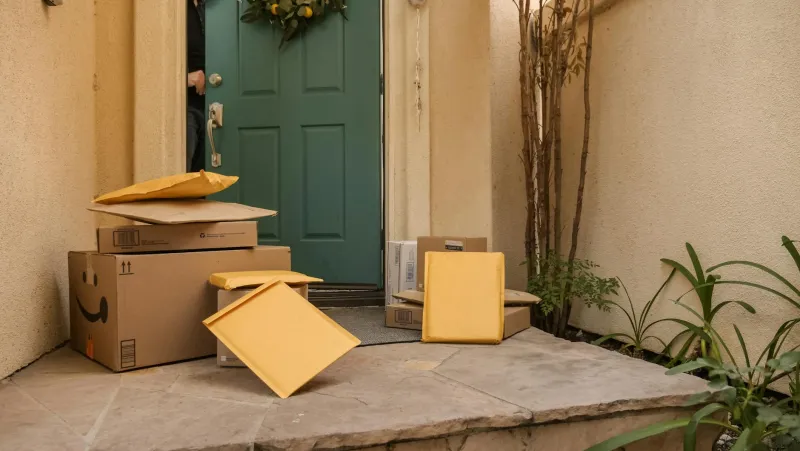
It started innocently enough. February 14th, to be exact — not because of any romantic significance, but because that's when you realized the package sitting by your front door wasn't decorative furniture. It needed to be returned. Simple enough. The store is literally six blocks away. You even drove past it twice that day.
"I'll do it tomorrow," you said, with the casual confidence of someone who has never met themselves.
Tomorrow came and went. The package remained.
But this wasn't procrastination in any traditional sense. This was the birth of something much more complex: a task so simple it became impossible, so quick it somehow required infinite time, so straightforward it tied your brain in knots.
The First False Start: February 15th
You woke up with purpose. Today was the day. You even put on pants with actual pockets instead of your usual sweatpants-and-regret combination. You grabbed your keys, walked to the door, looked at the package, and realized you needed the receipt.
The receipt was upstairs. Going upstairs meant passing your unmade bed, which reminded you that you should probably change the sheets, which reminded you that you needed to do laundry, which reminded you that you were out of detergent.
Suddenly, returning one package required a complex supply chain operation involving three different stores. This was no longer an errand — it was a logistical challenge that would make Amazon weep.
You put it off until tomorrow. Again.
The Excuse Evolution: February Through May
What followed was a masterclass in creative reasoning. Each day brought a new, perfectly logical explanation for why today wasn't the right day:
February 16th: "It's raining. The package might get wet on the way to the store." (The package was already wet from sitting in your entryway for two days.)
February 23rd: "I should call first to make sure they're open." (It's a Target. It's always open.)
March 8th: "I'll do it when I need to go to that side of town anyway." (You live in a town with four streets.)
March 20th: "I should really do it on a weekday when it's less crowded." (You work weekdays.)
April 3rd: "I'll do it after I get my oil changed." (Your car has been making that noise for six months.)
April 18th: "I should probably organize all my returns at once. Be more efficient." (This package was your only return.)
May 1st: "It's too nice outside to waste time on errands." (It's Oregon. It's always raining.)
The Psychological Transformation: May Through August
Somewhere around Memorial Day, the package stopped being an errand and became a roommate. You'd started navigating around it instinctively, the way you walk around furniture. Visitors would ask about it, and you'd developed a whole spiel: "Oh that? Yeah, I need to return that. It's on my list."
The package had developed its own personality. It was patient, understanding, non-judgmental. It never asked why you could manage to order Thai food at 11 PM but couldn't manage to drive six blocks to return it. It just sat there, quietly accumulating dust and existential weight.
By July, you'd started referring to it in the third person. "Package needs to go back," you'd tell yourself, as if Package were a friend who needed a ride to the airport. Package had become an entity separate from your own decision-making capacity.
The mental energy required to think about returning Package had begun to exceed the mental energy required to actually return Package by a factor of roughly 847.
The Reframe Campaign: August Through October
This is when things got creative. Since you couldn't seem to return the package, you decided to recontextualize the entire situation:
"Actually, it's better to wait until I really need to go to the store for something else. More efficient."
"I'm saving gas by combining errands."
"The return window might have expired anyway, so there's no rush."
"This is teaching me about mindfulness and living in the present moment."
"Some cultures would see this as a meditation on impermanence."
"Maybe the package wants to live here. Maybe I'm providing sanctuary."
By October, you'd convinced yourself that keeping the package was actually an act of environmental consciousness. Why contribute to the carbon footprint of unnecessary trips? You were basically saving the planet, one unfinished errand at a time.
The Acceptance Phase: October Through December
Winter brought a kind of peace. You and Package had reached an understanding. It would continue to exist in your entryway, and you would continue to exist in a state of low-level guilt about its presence. This was your relationship now.
You'd stopped adding "return package" to new to-do lists. Instead, it had achieved a kind of permanent status, like a constitutional amendment or a load-bearing wall. It was just part of your home's ecosystem now.
Friends would ask about it, and you'd shrug. "It's complicated," you'd say, as if Package were an ex you were trying to avoid at parties.
The Current State: Still February (The Next Year)
As I write this, Package remains. It has now been with you longer than some people stay married. It has witnessed seasons change, relationships begin and end, and your slow transformation from someone who believed they could maintain a consistent errand schedule to someone who has made peace with the chaos.
The beautiful truth is that Package isn't really about Package at all. Package is about the gap between who we think we are and who we actually are. We think we're the kind of people who handle simple tasks efficiently. We're actually the kind of people who can overthink a twelve-minute errand into an eleven-month philosophical journey.
And honestly? That's probably more interesting than just returning the thing.
Package understands. Package has always understood.