The Academy Award-Winning Performance of Waiting for Your DoorDash Driver
The Opening Act: Confident Optimism
You've done it. You've successfully navigated the digital minefield of food delivery apps, survived the psychological warfare of choosing between 847 restaurants within a 3-mile radius, and emerged victorious with an order placed. The app cheerfully informs you: "Estimated delivery time: 25-35 minutes." You nod sagely, like someone who has never ordered food delivery before and doesn't know that this estimate exists in the same realm of fantasy as "some assembly required" meaning five minutes.
You close the app with the confidence of someone who definitely won't check it again for at least ten minutes. Maybe you'll be productive. Maybe you'll finally organize that junk drawer. Maybe you'll call your mom.
Two minutes later, you're refreshing the tracking screen.
Act Two: The Descent into Madness
The restaurant has your order. This is good news, you tell yourself, ignoring the fact that this update came 47 seconds after you placed it, which seems suspiciously fast unless they have a psychic chef who started cooking before you even knew you were hungry.
You begin constructing elaborate theories about your meal's journey. That chicken tikka masala isn't just being prepared—it's being crafted by artisans who understand that you specifically need extra rice because you're going through something right now.
The app updates: "Your order is being prepared." You screenshot this like it's evidence in a federal case.
Suddenly, you're a detective. Why has it been seven minutes since the last update? Is the restaurant experiencing a crisis? Did they run out of ingredients? Are they closed and just forgot to update their status? You consider calling, but that would make you that person, so instead you'll just refresh the app every 30 seconds like a normal, well-adjusted adult.
The Driver Appears: Enter the Protagonist
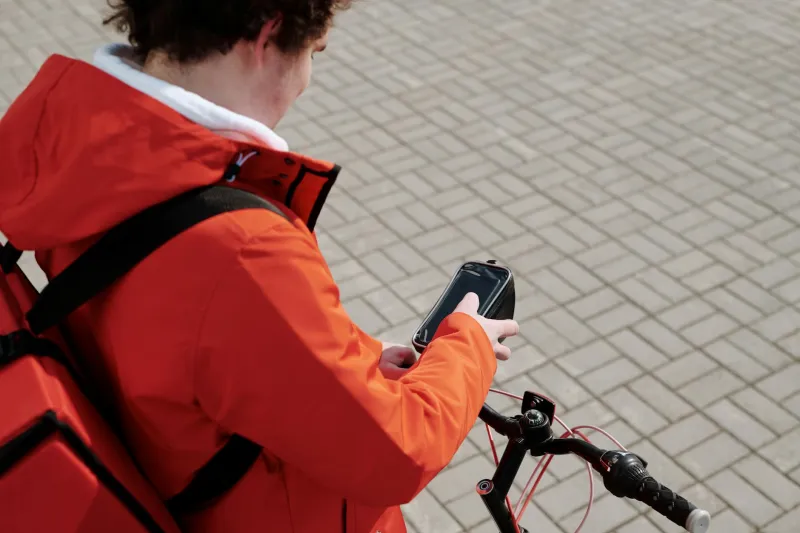
Your driver is Marcus. You don't know Marcus, but you're about to become emotionally invested in his entire life story based solely on a moving dot on your phone screen.
Marcus picked up your order at 7:23 PM. It is now 7:24 PM, and Marcus appears to be driving in the opposite direction of your apartment. This is fine. Marcus probably knows shortcuts you don't. Marcus is a professional.
By 7:26 PM, you've determined that Marcus is either: a) Taking a scenic route through three neighboring counties b) Making other deliveries (the betrayal!) c) Lost in a way that would require Search and Rescue d) Actually your ex-boyfriend who's doing this specifically to mess with you
You zoom in on the map until you can practically see individual potholes. You've memorized the street names in Marcus's vicinity. You could give directions to Marcus's current location better than Marcus could.
The Weather Report Nobody Asked For
It starts raining. Not hard, just enough to add another layer to your spiraling anxiety. You check the weather app—because apparently you're now a meteorologist—and discover there's a 15% chance of precipitation. Fifteen percent! This is basically a drought, meteorologically speaking, but your brain immediately pivots to disaster scenarios.
Poor Marcus, battling the elements to deliver your $47 worth of Indian food that probably cost $12 to make. You consider increasing the tip as hazard pay, then remember you already tipped 22% and you're not Jeff Bezos.
You peer out your window like a concerned parent waiting for a teenager to come home. The rain has stopped, but your weather-related anxiety has not.
The Final Countdown: Preparing for Human Contact
Marcus is three blocks away. This is not a drill.
You suddenly realize you look like someone who's been tracking a food delivery driver for 40 minutes, which is to say, unhinged. You're wearing the shirt you slept in last night, your hair defies at least two laws of physics, and you have a mysterious stain on your sweatpants that could be from this morning's coffee or last week's pizza.
But there's no time for a complete wardrobe change. Marcus is two blocks away.
You practice your interaction. "Thank you so much!" Too enthusiastic. "Thanks." Too cold. "Have a great night!" Perfect, except you'll probably forget to say it and just grunt while grabbing the bag.
You position yourself strategically near the door, but not too near, because you don't want to seem desperate. You're going for "casual person who just happened to be walking by their own front door at the exact moment you arrived."
The Climax: Contact
The doorbell rings. This is it. The moment you've been preparing for like it's a UN peace negotiation.
You open the door, and there's Marcus—a perfectly normal human being who probably didn't think twice about your order and definitely doesn't know that you've been psychoanalyzing his driving route for the past half hour.
"Order for...?" he asks, glancing at his phone.
You provide your name like you're checking into a hotel, not receiving takeout at your own residence. Marcus hands you the bag. You remember to say thank you. Marcus says have a good night. The entire interaction lasts 11 seconds.
The Denouement: Reality Sets In
You close the door and stand there holding your bag of food, suddenly aware that you've just spent 45 minutes creating an elaborate narrative around what is essentially a very normal commercial transaction.
The food is exactly as lukewarm as you expected. The rice portions are adequate, not generous. The driver followed GPS directions like a reasonable person, not a character in your personal drama.
You settle onto your couch, open your containers, and eat your dinner while watching Netflix, exactly as you planned when you first opened the delivery app an hour ago.
But tomorrow, when you inevitably order delivery again, you'll do the whole thing over. Because somewhere between clicking "place order" and hearing that doorbell, you've created a 45-minute entertainment experience that's more engaging than most movies.
And honestly? Marcus was probably a great driver.